


You must write the solutions to the problems single-sided on your own lined paper, with all sheets stapled together, and with all answers written in sequential order or you will lose points.
 is not antisymmetric
![\includegraphics[height=3cm]{h13a.eps}](img2.png)
 is antisymmetric
![\includegraphics[height=3cm]{h13b.eps}](img4.png)
 .
.

 .
.
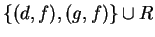 .
.
| 0 | 1 | 0 | 0 | 0 | 0 | 0 |
| 0 | 0 | 0 | 0 | 0 | 0 | 0 |
| 0 | 0 | 0 | 0 | 0 | 0 | 0 |
| 0 | 0 | 0 | 0 | 1 | 0 | 0 |
| 0 | 0 | 0 | 0 | 0 | 1 | 0 |
| 0 | 0 | 0 | 0 | 0 | 0 | 0 |
| 0 | 0 | 0 | 0 | 1 | 0 | 0 |
| 1 | 1 | 0 | 0 | 0 | 0 | 0 |
| 0 | 1 | 0 | 0 | 0 | 0 | 0 |
| 0 | 0 | 1 | 0 | 0 | 0 | 0 |
| 0 | 0 | 0 | 1 | 1 | 0 | 0 |
| 0 | 0 | 0 | 0 | 1 | 1 | 0 |
| 0 | 0 | 0 | 0 | 0 | 1 | 0 |
| 0 | 0 | 0 | 0 | 1 | 0 | 1 |
| 0 | 1 | 0 | 0 | 0 | 0 | 0 |
| 1 | 0 | 0 | 0 | 0 | 0 | 0 |
| 0 | 0 | 0 | 0 | 0 | 0 | 0 |
| 0 | 0 | 0 | 0 | 1 | 0 | 0 |
| 0 | 0 | 0 | 1 | 0 | 1 | 1 |
| 0 | 0 | 0 | 0 | 1 | 0 | 0 |
| 0 | 0 | 0 | 0 | 1 | 0 | 0 |
| 0 | 1 | 0 | 0 | 0 | 0 | 0 |
| 0 | 0 | 0 | 0 | 0 | 0 | 0 |
| 0 | 0 | 0 | 0 | 0 | 0 | 0 |
| 0 | 0 | 0 | 0 | 1 | 1 | 0 |
| 0 | 0 | 0 | 0 | 0 | 1 | 0 |
| 0 | 0 | 0 | 0 | 0 | 0 | 0 |
| 0 | 0 | 0 | 0 | 1 | 1 | 0 |
![\includegraphics[height=3cm]{h131.eps}](img9.png) |
![\includegraphics[height=3cm]{h132.eps}](img10.png) |
![\includegraphics[height=3cm]{h133.eps}](img11.png) |
![\includegraphics[height=3cm]{h134.eps}](img12.png) |
 is:
is:
| 1 | 0 | 0 | 0 | 1 | 0 |
| 0 | 1 | 1 | 0 | 0 | 1 |
| 1 | 1 | 1 | 0 | 0 | 1 |
| 1 | 0 | 1 | 1 | 1 | 0 |
| 0 | 0 | 0 | 0 | 1 | 1 |
| 0 | 1 | 1 | 1 | 0 | 0 |
The reflexive closure of is:
| 1 | 0 | 0 | 0 | 1 | 0 |
| 0 | 1 | 1 | 0 | 0 | 1 |
| 1 | 1 | 1 | 0 | 0 | 1 |
| 1 | 0 | 1 | 1 | 1 | 0 |
| 0 | 0 | 0 | 0 | 1 | 1 |
| 0 | 1 | 1 | 1 | 0 | 1 |
The symmetric closure of is:
| 1 | 0 | 1 | 1 | 1 | 0 |
| 0 | 1 | 1 | 0 | 0 | 1 |
| 1 | 1 | 1 | 1 | 0 | 1 |
| 1 | 0 | 1 | 1 | 1 | 1 |
| 1 | 0 | 0 | 1 | 1 | 1 |
| 0 | 1 | 1 | 1 | 1 | 0 |

For  to be antisymmetric means that for all real numbers
  and
and  in A, If
  and
and  then x = y. This follows immediately from the definition of which says that given any real numbers and , exactly one of the following holds:
 or
or  or
or  .
.
 and B
and B . Since
 and
and
 .
.
Counter example: 1 R 3 ( because 1 + 3 is even) and 3 R 1 ( because 3 + 1 is also even) but 

![\includegraphics[height=3cm]{h13p11.eps}](img29.png)
is an equivalent relation on the set  .
Find the distinct equivalence classes of .
.
Find the distinct equivalence classes of .
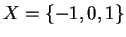 and
and  . is defined on
  as follows:
For all sets
as follows:
For all sets  and
and  in ,
in ,

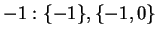

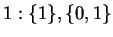 is the set of all strings of length 2 in 0's, 1's, and 2's. is defined on as follows:
For all strings
is the set of all strings of length 2 in 0's, 1's, and 2's. is defined on as follows:
For all strings  and
and  in ,
in ,



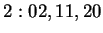


 be the set of all points in the Cartesian plane except the origin. is the relation defined as follows:
For all
be the set of all points in the Cartesian plane except the origin. is the relation defined as follows:
For all  and
and  in ,
in ,

ANSWER:
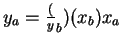
This problem becomes one of looking at the slope of the line that determines the equivalence class as well as the quadrant of the caresian plane it exists in. Assuming that
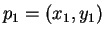 , the slope of the line that eminates from the origin through this point is
 (since the second point used
to determine the slope is the origin. Using the slope/intersept form of the
formula for a line we get the formula for the line is
(since the second point used
to determine the slope is the origin. Using the slope/intersept form of the
formula for a line we get the formula for the line is
 since the intersept is also determined by the origin. The other portion is that the quadrant needs to be the same (this is the only way we can talk about 1/2 lines rather than full lines). The quadant is determined by the parity (positive/negative) of the x's being the same and the parity of the y's being the same. Therefore the relationship is that and are related where
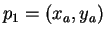 and
and
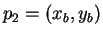 if an only if
 . In order to see that this forms an equivalence relation we must be able to prove that it
is reflexive, symmetric and transitive.
. In order to see that this forms an equivalence relation we must be able to prove that it
is reflexive, symmetric and transitive.
Reflexive:
When you let  be arbitrary in the caresian plane.
The formula
 reduces to
  when you cancel the b's.
Therefore it is reflexive as long as the point is not the origin.
Also every point is in the same quadrant of the cartesian plane with itself
so this property is also reflexive.
Symmetric:
Comparing the formulas:
 and
and

You see that they are algrbraically equivalent.
This means that the relationship is symmetric.
Also every two points if is in the same quadrant as then is in the same quadrant as so this property is also symmetric.
Transitive:
Let  be arbitrary on the cartesian plane (but none are the origin).
Let
and 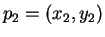 and
and
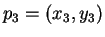 .
.
Assume that is related to and that is related to  .
.
This means that
 and
and
 by the definition of the function.
By substitution we get
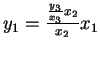
Cancelling the  we get

Since this is the formula that shows that is related to , we know that the formula is transitive.
Also if is in the same quadrant as and is in the same quadrant as then is in the same quadrant as so this property is
also transitive.
Since it has the properties of being reflexive, symmetric and transitive,
it is an equivalence relation.
be a binary relation on a set and suppose is symmetric and transitive. Prove the following:
If for every  in there is a
  in such that
  , then is an equivalence relation.
is symmetric, implies
, then is an equivalence relation.
is symmetric, implies  . Since is transitive, and implies
  . Thus is reflexive and therefore is an equivalence relation.
on the set
. Thus is reflexive and therefore is an equivalence relation.
on the set  of all integers as follows: For all
 ,
,

 and
and  but
but  on the set
  of all real numbers as follows: For all
 ,
,
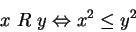
 and
and
 but
but 
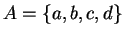 , and let be the relation
 a total order on ? justify your answer.
 , either
  or
or  is in . It is a partial order because it is reflexive, antisymmetric and transitive. In particular, the order is
 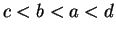 .
.