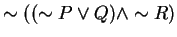
 for each of the circuits given in the figures below.
| ANSWERS: |
| p=1, q = 0, and r = 1 --> x = 0 |
| p=0, q = 0, and r = 1 --> x = 1 |
| p = 1, q = 0, and r = 1 --> x = 0 |
| p = 0, q = 0, and r = 1 --> x = 1 |




|
| ANSWERS: |
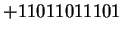
| 1010101 |
| 101110101001 |
 mean that x has visited y, where the universe of discourse for x is the set of all students in your school (P for people) and the universe of discourse for y is the set of all Web sites (S for sites). For ease of writing assume all first names are unique among the members of this domain. Express each of the following statements in a simple English sentence.
 ANSWER: Sarah has visited att.com.
 ANSWER: Someone in my school has visited imdb.org.
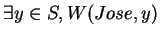 ANSWER: Jose has visited at least one site.
 ANSWER: There's at least one site that both Joe and Tom have visited.
 ANSWER: There is a student other than David that has at least visited all of the sites that David has visited.
 ANSWER: There are at least two different students that have visited exactly the same sites.
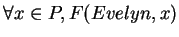
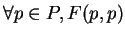
 be the statement ``x can fool y'' where the universe of discourse for both is the set of all people in the world (P for people). Use quantifiers to express each of the following statements:
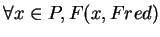







 is not equivalent to
 .
ANSWER: As the class email said as well as the web page - there was a typo on
this question - both conjunctions should have been disjunctions.
.
ANSWER: As the class email said as well as the web page - there was a typo on
this question - both conjunctions should have been disjunctions.