


For each of the following, state either that the statement is true or that the statement is false. Then give a complete, convincing proof to justify your answer.
 , if is an even integer then
  is an even integer.
TRUE.
This is the same as
 .
.
Proof.
| Let x be arbitrary in the domain of integers. |
 Assmue is even. Assmue is even. |
Then  for some integer for some integer  by the definition of even. by the definition of even. |
Then
 by substitution. by substitution. |
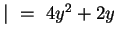 by multiplication. by multiplication. |
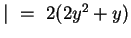 by distribution. by distribution. |
Since 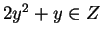 by the closure of the integers in addition and multiplication, by the closure of the integers in addition and multiplication, |
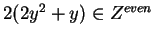 by the definition of even by the definition of even |
and
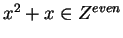 by substitution of equalities. by substitution of equalities. |
 by closing the conditional world without a contradiction.
 |
| Since x was arbitrary in the domain of integers, we can use generalizing from the generic particular to get: |
|
|
| QED |
TRUE.
This is the same as
 .
.
Proof.
| Let and be arbitrary rational numbers. |
Then
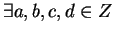 such that such that
 and and
 |
where  and and  . . |
Then
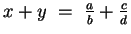 by substitution by substitution |
 by multiplication of fractions by multiplication of fractions |
 by addition of fractions. by addition of fractions. |
Since the integers are closed under addition and multiplication,
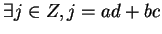 . . |
Since the integers are closed under multiplication,
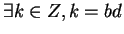 . . |
Since neither  nor nor  are 0, are 0,  by multiplication rules of algebra. by multiplication rules of algebra. |
Since
 where where  and and  are both integers and are both integers and  , , |
 by definition of rational. by definition of rational. |
| Since x and y were both arbitrary in Q, we can generalize to: |
|
. |
| QED |
FALSE.
Disproof by counter example.
Select  .
is irrational,
.
is irrational,
but
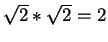 , which is rational.

TRUE.
Proof.
| Let x, y and z be arbitrary integers. |
Assume  and and  |
 such that such that  and and  by definition of divides. by definition of divides. |
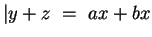 by substitution. by substitution. |
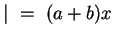 by distribution. by distribution. |
Since  by closure of Z in addition, by closure of Z in addition, |
 , by definition of divides. , by definition of divides. |
 by closing the conditional world without a contradiction. by closing the conditional world without a contradiction. |
Since , and  were arbitrary integers, we can generalize from the generic particular and get: were arbitrary integers, we can generalize from the generic particular and get: |
 . . |
TRUE.
Proof.
Let  be an arbitrary integer. be an arbitrary integer. |
Then its successor is  . . |
The sum of these two consecutive integers is  |
This equals  by algebra. by algebra. |
Since was defined above as an integer,
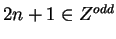 by the definition of odd. by the definition of odd. |
| Since was arbitrary in the set we can generalize to: |
| For all pairs of two consecutive integers, their sum is odd. |
greater than 3,

TRUE.
Proof.
| Let be an arbitrary integer greater than 3. |
Then  for some integer for some integer  . . |
Therefore
 by substitution. by substitution. |
 by algebra. by algebra. |
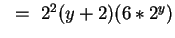 by associativity and commutativity. by associativity and commutativity. |
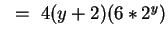 by squaring the 2. by squaring the 2. |
Since
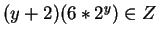 by closure of Z in addition and multiplication, by closure of Z in addition and multiplication, |
we know that
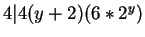 by definition of divides by definition of divides |
| and
by substitution. |
| QED |

TRUE.
Proof:
| Let n be arbitrary in Z. |
Assume
 . .
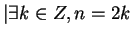 by definition of even. by definition of even. |
 by substitution. by substitution. |
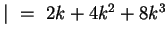 by algebra by algebra |
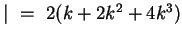 by distribution by distribution |
Since
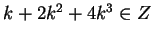 by closure of Z in multiplication and addition, by closure of Z in multiplication and addition, |
 by the definition of even. by the definition of even. |
and
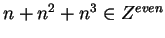 by substitution. by substitution. |
Therefore
 by closing the conditional world w/out contradiction. by closing the conditional world w/out contradiction. |
| Since n was arbitrary in the integers, we can generalize to: |
 |
| QED |

TRUE.
Proof.
Assume and are arbitrary in  . . |
Then  , where , where  by the definition of odd, by the definition of odd, |
and  , where , where  by the definition of odd. by the definition of odd. |
Then
 by substitution by substitution |
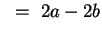 by algebra by algebra |
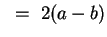 by distribution. by distribution. |
Since  by closure of Z in subtraction, by closure of Z in subtraction, |
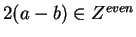 by the definition of even by the definition of even |
and
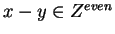 by substitution. by substitution. |
| QED |

TRUE.
We construct the contrapositive.
We must show that


Proof.
| Let be arbitrary in Z. |
Assume  . .
 by algebra. by algebra. |
 by definition of less than or equal to. by definition of less than or equal to. |
 by substitution. by substitution. |
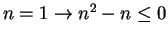 by closing the conditional world without contradiction. by closing the conditional world without contradiction. |
| Since n was arbitrary in Z, we can generalize to: |
 . . |
| QED |
is the sum of any four consecutive integers,
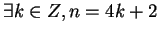 .
.
TRUE.
Proof.
| Let m be arbitrary in the domain of integers. |
Four consecutive integers can be written as
 , ,  , ,  , and , and  . . |
Then their sum is
 |
 by algebra. by algebra. |
Select  . .  by closure of Z in addition. by closure of Z in addition. |
 by substitution. by substitution. |
| Since m was arbitrary in Z, this can be generalized to: |
 . . |
| QED |
, is an even number if and only if  is even.
TRUE.
We must show that if is even then is even,
and if is even then is even.
For the second statement, we construct the contrapositive
and show that if is odd then is odd.
So we need to prove the following two statements:


Proof.
| Let be arbitrary in the domain of integers. |
| Assume is even. |
Then  for some integer . for some integer . |
Then
 by substitution by substitution |
 by algebra by algebra |
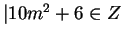 by the closure of the integers in addition and multiplication. by the closure of the integers in addition and multiplication. |
So
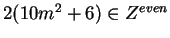 by the definition of even by the definition of even |
and
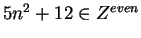 by substitution of equalities. by substitution of equalities. |
 by closing the conditional world without a contradiction.
 |
| Since was arbitrary in the domain of integers, we can use generalizing |
| from the generic particular to get: |
|
|
| Let be arbitrary in the domain of integers. |
| Assume is odd. |
Then  for some integer . for some integer . |
Then
 by substitution by substitution |
 by algebra by algebra |
 by the closure of the integers in addition and multiplication. by the closure of the integers in addition and multiplication. |
So
 by the definition of odd by the definition of odd |
and
 by substitution of equalities. by substitution of equalities. |
 by closing the conditional world without a contradiction.
 |
| Since was arbitrary in the domain of integers, we can use generalizing |
| from the generic particular to get: |
|
|
| QED |

TRUE.
Proof.
| Let be arbitrary in the domain of integers. |
 |
Case  : : |
 by substitution by substitution |
 by algebra by algebra |
Let  |
| by the closure of the integers in multiplication. |
 by substitution by substitution |
 by disjunctive addition. by disjunctive addition. |
 by existential generalization.
 |
Case  : : |
 by substitution by substitution |
 by algebra by algebra |
Let 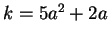 |
| by the closure of the integers in addition and multiplication. |
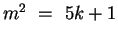 by substitution by substitution |
|
by disjunctive addition. |
|
by existential generalization. |
Case  : : |
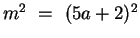 by substitution by substitution |
 by algebra by algebra |
Let  |
| by the closure of the integers in addition and multiplication. |
 by substitution by substitution |
|
by disjunctive addition. |
|
by existential generalization. |
Case  : : |
 by substitution by substitution |
 by algebra by algebra |
Let
 |
| by the closure of the integers in addition and multiplication. |
|
by substitution |
|
by disjunctive addition. |
|
by existential generalization. |
Case  : : |
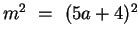 by substitution by substitution |
 by algebra by algebra |
Let
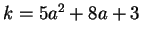 |
| by the closure of the integers in addition and multiplication. |
|
by substitution |
|
by disjunctive addition. |
|
by existential generalization. |
| Therefore,
by proof by divistion into cases. |
| Since was arbitrary in the domain of integers, we can use generalizing
from the generic particular to get: |
|
|
| QED |