


Next: About this document ...
CMSC 250 Homework 14 Spring 2006
This Homework is never actually due.
It is up to you when and if you do it.
You must write the solutions to the problems single-sided on your own lined paper, with all sheets stapled together, and with all answers written in sequential order or you will lose points.
- Answer the following questions about cardinality:
- Assume you have two infinite sets (A and B). How would you be able to determine if A and B have the same cardinality?
Find a bijection (or one-to-one correspondence) between the two sets.
- Give the information necessary to show that
 has the same cardinality as
  .
Define
.
Define
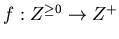 as
as 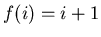 .
.
- Give the information necessary to show that
 has the same cardinality as .
Define
has the same cardinality as .
Define
 so that positive numbers map to the evens (
 for
for  )
and nonpositive numbers map to the odds (
)
and nonpositive numbers map to the odds ( for
for  ).
).
- Give the information necessary to show that
 has the same cardinality as .
Define
has the same cardinality as .
Define
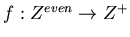 so that positive evens map to themselves (
 for )
and nonpositive numbers map to the positive odds (
for )
and nonpositive numbers map to the positive odds (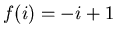 for ).
- Let
 . Let
. Let  be the relation of congruence mod 11. Let
  be the set of equivalence classes for . Prove that any function from
  to
to  must map 4 elements to at least one
  .
.
 and
and  .
.
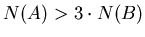 , since
 .
.
By the generalized pigeon hole principle, some element of  must be the image of
  elements of .
- Let
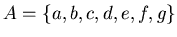 . Let be a binary relation on with the following pairs related:
  ,
,  ,
,  ,
,  . Write the following sets using ordered pair notation.
-

- The reflexive closure of .

- The symmetric closure of .

- The transitive closure of .

- Redo number 3 representing each relation as a matrix.
-
- The reflexive closure of .
- The symmetric closure of .
- The transitive closure of .
- Redo number 3 representing each relation as a directed graph.
=4.5in

- Let be a relation defined by
Reflexive closure or :
Symmetric closure or :
Is asymmetric?
NO:  is in the relation.
Is antisymmetric?
is in the relation.
Is antisymmetric?
NO:  and
and  are both in the relation.
- Let
 . Let be a binary relation defined on defined by
  if
if  . Write the the relation using ordered pair notation, and show that the relation is antisymmetric.

 ,
,
 ,
,
 ,
,
 ,
,
 ,
,
 ,
,
 ,
,
 ,
,
 ,
,
 ,
,
 ,
,
 ,
,
 ,
,
 ,
,
 ,
,
 ,
,
 ,
,
 ,
,
 ,
,
 ,
,
 ,
,

 Antisymmetic: There are no two pairs
  and
and  for
for  .
.
- Let be a finite nonempty set and let be a relation on
 (the power set of defined by
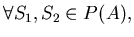
 if
if
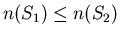 . Show that is a partial ordering.
- Using the subset partial order relation, give an example of two elements that are not comparable.
 and
and  Neither is a subset of the other.
- Let
 . Let be the partial order relation defined by inclusion of subsets of . Write a chain
  of maximal length contained in .
 ,
,
 ,
,
 ,
,
 ,
,
 ,
,
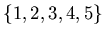 ,
,
 ,
,
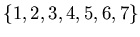 ,
,
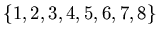
Next: About this document ...
Chang Hu
2006-05-14
Web Accessibility
![\begin{displaymath}
\begin{array}{ c }
a \\ b \\ c \\ d \\ e \\ f \\ g \\
\e...
... & 0 \\
0 & 0 & 0 & 0 & 1 & 0 & 0 \\
\end{array}
\right]
\end{displaymath}](img36.png)
![\begin{displaymath}
\begin{array}{ c }
a \\ b \\ c \\ d \\ e \\ f \\ g \\
\e...
... & 0 \\
0 & 0 & 0 & 0 & 1 & 0 & 1 \\
\end{array}
\right]
\end{displaymath}](img37.png)
![\begin{displaymath}
\begin{array}{ c }
a \\ b \\ c \\ d \\ e \\ f \\ g \\
\e...
... & 0 \\
0 & 0 & 0 & 0 & 1 & 0 & 0 \\
\end{array}
\right]
\end{displaymath}](img38.png)
![\begin{displaymath}
\left[
\begin{array}{ c c c c c c }
1 & 0 & 0 & 0 & 1 & 0...
... & 0 & 1 \\
0 & 1 & 1 & 1 & 0 & 0 \\
\end{array}
\right]
\end{displaymath}](img40.png)
![\begin{displaymath}
\left[
\begin{array}{ c c c c c c }
1 & 0 & 0 & 0 & 1 & 0...
... & 1 & 1 \\
0 & 1 & 1 & 1 & 0 & 1 \\
\end{array}
\right]
\end{displaymath}](img41.png)
![\begin{displaymath}
\left[
\begin{array}{ c c c c c c }
1 & 0 & 1 & 1 & 1 & 0...
... & 0 & 1 \\
0 & 1 & 1 & 1 & 1 & 0 \\
\end{array}
\right]
\end{displaymath}](img42.png)