


| Name (PRINTED): | |
| Student ID #: | |
| Section # (or TA's: | |
| name and time) |
| CMSC 250 | Quiz #6 ANSWERS | Wed., Mar. 1, 2006 |
Assume  is a rational number and
  is an integer.
Since is rational,
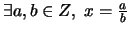
The product of and can be written as

After multiplying, the sum is 
Since  by closure of multiplication
and  because it was defined as such above,
The product is an fraction of an integer over an integer which means that it is also rational by the definition of rational.
because it was defined as such above,
The product is an fraction of an integer over an integer which means that it is also rational by the definition of rational.
 , if is odd then
  is odd.
Since is an odd integer,
 by the
definition of odd.
by the
definition of odd.
Since  ,
,
 .
.

Since  is an integer by closure of integers during addition and multiplication,
is also even by the definition of even.
is an integer by closure of integers during addition and multiplication,
is also even by the definition of even.
and  ,
,  .
.
False  and
and  ,
,
 which is not greater than 5.
 is also even.

 and
and  , then
