CS Majors Build Construction Safety App at Ironsite Hackathon
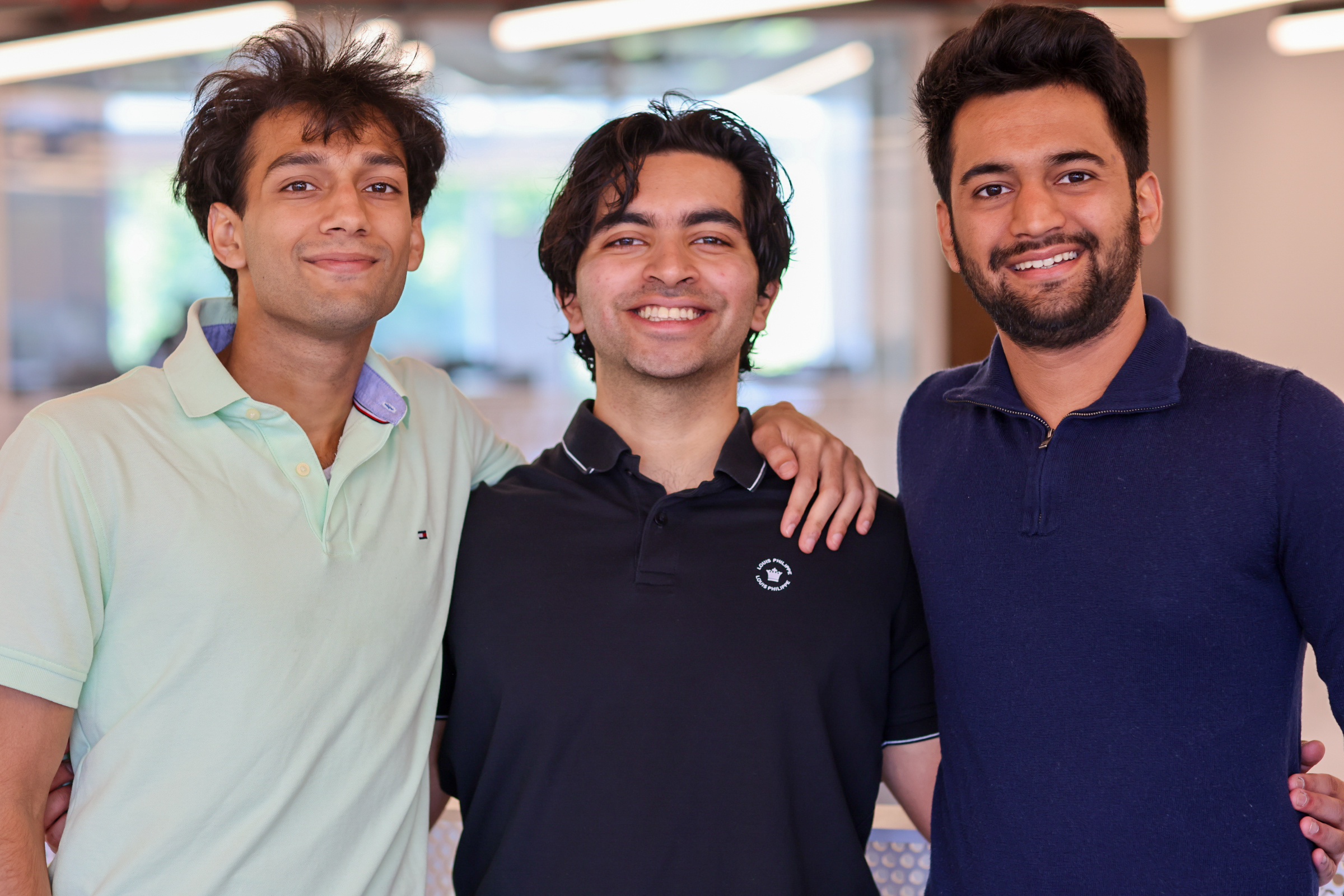
Construction sites generate large amounts of video from body cameras, mounted cameras and other tools used to document work as it happens. For three University of Maryland computer science students, that footage became the foundation of a 36-hour project focused on turning raw visual data into actionable safety insight.
That approach earned Rajveer Singh, Ananth Sriram and Neel Mokaria first place at the Ironsite Hackathon, a 36-hour event centered on a key question: Can a machine be taught to understand the physical world? The team won $10,000 for developing a construction safety assistant dashboard that analyzes video and flags potential hazards.
For Sriram, the event stood out from previous hackathons because it focused on a real-world industry problem. He had previously participated in Bitcamp during his freshman and sophomore years at UMD, but had not competed in a hackathon since.
“This one really interested me because it was a lot more application and impact-driven than other hackathons that I’ve seen,” Sriram said.
Turning Footage into Safety Insights
The team began preparing ahead of the event by reviewing projects from a similar Ironsite hackathon held at another university.
That early research helped them understand the company’s priorities, but Singh said the team finalized its direction after hearing Ironsite leaders describe the outcomes they sought from the data.
“They really clarified what they wanted from this hackathon; they were looking for actionable insights from the data,” Singh said. “That’s when we identified the specific niche we wanted to target in terms of data interpretation.”
The students built a dashboard using a multi-step pipeline that combined industry-standard models with verification by large language and visual models. This additional layer helped assess the accuracy of predictions before displaying results on the dashboard.
“We built a dashboard that would ingest videos and identify violations, including when they occurred and the exact frame,” Singh said. “We showed issues like missing safety gear, unsafe postures and proximity to heavy equipment.”
As the project developed, the team used feedback from Ironsite employees to decide which features were useful for a construction safety platform. The students tested ideas, checked whether the outputs were reliable and adjusted the dashboard during the event.
Singh said the process required dividing responsibilities while continuously sharing findings and making decisions collaboratively.
“It was a lot of back and forth as we built the app,” Singh said. “All three of us were doing independent research on how to improve the product
Beyond the Hackathon
After submissions closed, the top eight teams were selected from roughly 40 teams to present live demonstrations to the Ironsite team.
“It was a little bit nerve-wracking, for sure,” Sriram said. “Everyone was nervous at the same time, and we all kind of bonded over it.”
The event also gave the team an opportunity to connect with other participants, judges and members of the Ironsite team.
Sriram said the group is now exploring ways to continue the project beyond the hackathon, potentially developing it into a research paper with support from UMD faculty.
“We’re definitely thinking about continuing this work,” Sriram said. “Whether through professors we met at the event or professors we’ve worked with, we want to see how far this project can go.”
—Story by Samuel Malede Zewdu, CS Communications
The Department welcomes comments, suggestions and corrections. Send email to editor [-at-] cs [dot] umd [dot] edu.