The Code They Couldn't Talk About

For much of the career of alum Eileen Buckholtz (M.S. ’73, computer science), the details of her work at the National Security Agency remained private. She could discuss projects with colleagues, but not with her husband, children or friends. Some accomplishments could not appear on a resume.
That secrecy also meant the experiences of Buckholtz and other women working with computers at the agency were largely absent from the public record.
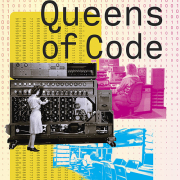
More than five decades after beginning her career, Buckholtz is revisiting that history through “Queens of Code,” a project documenting the women who worked in computing at the NSA.
“There were more than 150 of us, but I wrote about 25 in my book,” Buckholtz said. “We were almost all hired as 21- and 22-year-old women, and we began to program and manage the most sophisticated computers in the world.”
Early computing
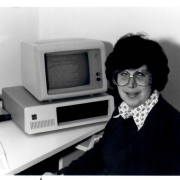 Buckholtz entered the field when computer science was still developing as an academic discipline. After earning an undergraduate degree in computer science from Ohio State University, she joined the NSA at 21.
She later earned her master’s degree in computer science from the University of Maryland in 1973, the same year UMD established its Department of Computer Science.
At Maryland, Buckholtz encountered technologies and ideas that were reshaping computing. A discussion in a data communications course introduced her to ARPANET, the early network that preceded the modern internet. At NSA, she connected to the network for the first time and sent a message to a researcher at the Stanford Research Institute, now SRI International, in California.
“There were a lot of possibilities,” she said.
Her master’s research explored potential computer applications in a cable television environment, including concepts such as online education and shopping. Her work, advised by Professor Emeritus Victor Basili, was later published in Communications of the ACM, and she presented her research at the 1973 ACM Annual Conference.
Buckholtz also carried lessons from UMD back to the NSA. After taking a course on formal requirements for projects, she brought the methodology to the agency, where she said it was later adopted for requirements specification.
A Career Behind Secrecy
During her 31-years at the NSA, Buckholtz worked across a range of emerging technologies and computer systems.
She served as the first project manager for a multimillion-dollar UNIVAC 1110 system and worked in areas including office automation, word processing, CD-ROM development, library automation and machine translation. She also helped develop the agency’s first five-year plan for computers and telecommunications.
Much of that work could not be discussed outside the agency.
“It’s hard because you couldn’t tell your husband or your kids what you were doing,” Buckholtz said. “For some of the women who tell their stories now, and my family too, it was the first time they had heard about the things that we had done.”
The restrictions went beyond conversations at home. Classified projects couldn't be publicly described or included on resumes.
Decades later, that experience would help motivate Buckholtz to document the careers of the women who had worked alongside her.
Finding Missing Stories
Buckholtz had long wanted to write about her NSA experience, but she understood the challenges of publishing material involving classified work.
Then a visit to the Computer History Museum in California gave the idea renewed urgency.
As she walked through the exhibits, Buckholtz noticed a history dominated by machines and male figures, with relatively few women represented.
“That was not the environment that I knew,” she said.
In 2018, Buckholtz began working with NSA historians and the National Cryptologic Museum to determine how to preserve those experiences while complying with the agency’s prepublication review process. The process differed from a typical oral history. Former colleagues first had to write their own accounts and receive NSA approval before Buckholtz could review them.
History revisited
 Reconnecting with former colleagues changed Buckholtz’s understanding of the work taking place around her at the NSA. Because employees often knew only part of what others were doing, she said she had not fully understood the scope of some colleagues’ contributions until she began researching their careers.
That work led her to projects in areas including microelectronics and cybersecurity, while also revealing how often mentorship shaped those careers.
Buckholtz said she worked for nine women during her NSA career, many of whom helped guide her professionally. She later saw that pattern continue as women who had benefited from mentorship early in their careers supported the generations that followed.
Among Buckholtz’s own mentors was Dottie Bloom, an NSA supervisor who gave her opportunities to take on technical and planning projects.
Looking back through those experiences has also changed how Buckholtz sees her own place in computing history.
“I didn’t when I first started, but I guess I see myself now as a historian,” she said.
Her research has since expanded beyond individual biographies to examine the broader history of computing at the NSA. For Buckholtz, documenting that history is also a way to show current students who participated in the field’s early development.
“I think it’s really important to women in STEM today to be able to know that there were women who were here at the beginning of computing,” she said. “I hope that the work that I do of bringing these stories to light helps them feel like they belong and that there’s a future for them.”
—Story by Samuel Malede Zewdu, CS Communications
###
Queens of Code: Inspiring True Stories from NSA’s Computing Women will be published by MIT Press on Nov. 17, 2026.
Other UMD graduates featured in the book include:
Carol Osborne McWilliams (B.A. ’67, english)
Peggy Ann Grindrod Strader (B.A. ’66, education)
Kathy Reading (B.S. ’98, management)
Mary T. Clulow (B.S. ’97, information systems management)
Readers, including students interested in learning more about Buckholtz’s work, can connect with her through the Queens of Code website, LinkedIn or the Queens of Code Facebook page.
The Department welcomes comments, suggestions and corrections. Send email to editor [-at-] cs [dot] umd [dot] edu.