Recent News & Accomplishments
2026

The award honors alumni whose work and achievements have made a significant difference in their communities and fields.
David Mount , a professor of computer science at the University of Maryland, was named a recipient of the 2026 Distinguished Science Alumni Award from Purdue University. Mount earned his doctorate in computer science from Purdue in 1983 after completing both his undergraduate and graduate studies there. The award honors alumni whose work and achievements have made a significant difference in their communities and fields. “It’s a great honor to be recognized by my alma mater,” Mount said. “This award is given once each year, and to receive that recognition is very meaningful to me.” Mount said... read more

More than 120 researchers convened at the University of Maryland on Friday, March 20, for the 10th annual Mid-Atlantic Microbiome Meet-up. The one-day symposium, held at the Brendan Iribe Center for Computer Science and Engineering, brought together a diverse community of microbiome scientists from across the Mid-Atlantic region and beyond, spanning academia, government and industry. This year’s theme, “ Engineering and Analytics in Microbiome Research ,” underscored the growing importance of quantitative methods, high-throughput sequencing technologies, and systems-level modeling in... read more

Inside the University of Maryland lab, researchers design small, interactive devices that explore how people engage with technology through physical experience.
At the University of Maryland’s Department of Computer Science, the Small Artifacts Lab , or SMART Lab, focuses on designing and studying technology as physical objects. Led by Assistant Professor of Computer Science Huaishu Peng , the lab develops compact, intelligent devices that emphasize touch, interaction and real-world use. Researchers examine how these artifacts are created and how their physical form can shape the way people engage with technology. Among them is Ph.D. student Zeyu Yan , whose research explores how hardware design can be rethought to address electronic waste. His work... read more

Mohammad Hajiaghayi leads DARPA-backed GENIUS initiative at UMD to develop AI systems that can reason alongside mathematicians and advance complex problem-solving.
The University of Maryland will lead a new cross-institutional research effort designed to dramatically accelerate mathematical discovery by combining advanced artificial intelligence (AI) with deep human expertise in computer science and mathematics. As mathematicians tackle increasingly complex questions—from cybersecurity to algorithm design used to verify software in aerospace, healthcare, and autonomous vehicles—researchers aim to develop AI systems that can reason strategically alongside human experts, helping address problems whose scale and complexity have long limited progress. To... read more
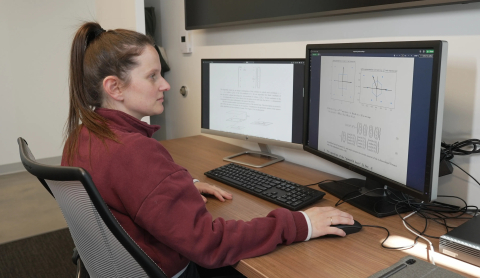
A UMD postdoctoral researcher explores how cryptography and machine learning can work together to enable secure AI systems trained on encrypted data.
The rapid advancement of artificial intelligence depends on access to vast amounts of data—much of it deeply sensitive. From medical records to financial histories, these datasets fuel powerful machine learning models while raising a fundamental challenge: how to train AI systems without exposing the underlying information. Natalie Lang , a postdoctoral associate at the University of Maryland Institute for Advanced Computer Studies (UMIACS) and the Maryland Cybersecurity Center (MC2), is working to solve that problem. “My goal for this postdoc is to move the needle on privacy and security in... read more

In collaboration with Adobe, CS Ph.D. student Sonal Kumar advances audio timestamp captioning to improve how AI understands speech and complex sounds.
From voice assistants answering questions to automated captions appearing on videos, artificial intelligence increasingly relies on audio to interact with people. Yet many systems still struggle to interpret sound the way humans do, especially when speech includes different accents or when multiple sounds occur at once. At the University of Maryland, Ph.D. student Sonal Kumar is working to address those challenges through timestamped audio captioning —an emerging approach that helps AI understand not only what it hears, but also when sounds occur. Advised by Professors Ramani Duraiswami and... read more

Admitted applicants attend the annual CS Visit Day, meeting faculty, exploring labs and connecting with graduate students at the Brendan Iribe Center.
The Department of Computer Science held its annual Graduate Visit Day on March 13, 2026, welcoming admitted prospective Ph.D. students to the Brendan Iribe Center for Computer Science and Engineering. The event gave visitors the chance to meet faculty members, speak with current graduate students and learn more about the department’s research environment before making final enrollment decisions. The University of Maryland’s graduate computer science program is consistently ranked among the top programs in the United States. According to U.S. News & World Report, the program is ranked No... read more

The Institute for Trustworthy AI in Law & Society (TRAILS) has announced 11 Broader Impact Awards designed to expand access, participation and understanding of trustworthy artificial intelligence. Unveiled March 11, the awards—up to $25,000 each—will support seed projects that help diverse stakeholder communities engage with and influence the future of AI. TRAILS leaders say the funding is intended to spark grassroots initiatives connecting academia, industry and local communities while expanding access to AI education and governance tools. “Our goal is to help close the loop among... read more
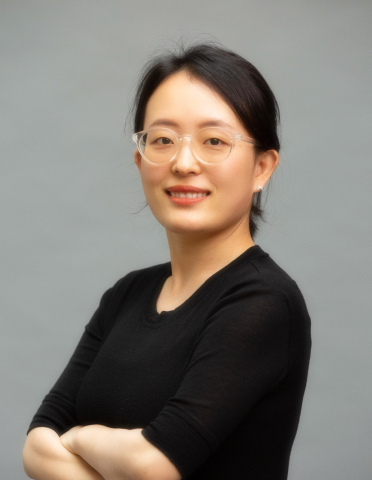
CS Ph.D. student Yajie Zhou develops NetArena benchmark to evaluate safety and reliability of AI agents managing complex systems.
As artificial intelligence systems take on a growing role in automating technical tasks, researchers are examining how those tools can be safely applied to critical infrastructure. In areas such as network and system operations, even a small error by automated software can disrupt services used by thousands of people. That risk has made many operators cautious about relying on AI tools, despite their potential to reduce the time required to diagnose and fix system problems. At the University of Maryland’s Department of Computer Science, Ph.D. student Yajie Zhou is studying how AI agents can... read more

Lee explores how large-scale human data can help robots perform everyday household tasks.
As scientists work toward a future where robots can handle everyday household chores like washing dishes, folding laundry and ironing shirts, one of the field’s biggest hurdles is ensuring these machines can operate reliably in the unpredictable environments of real homes. At the University of Maryland, doctoral student Seungjae “Jay” Lee is developing new data-driven methods designed to bridge the gap between impressive laboratory demonstrations and dependable real-world performance. His work centers on enabling robots to learn not only from their own physical experiences, but also from the... read more